
Product Description
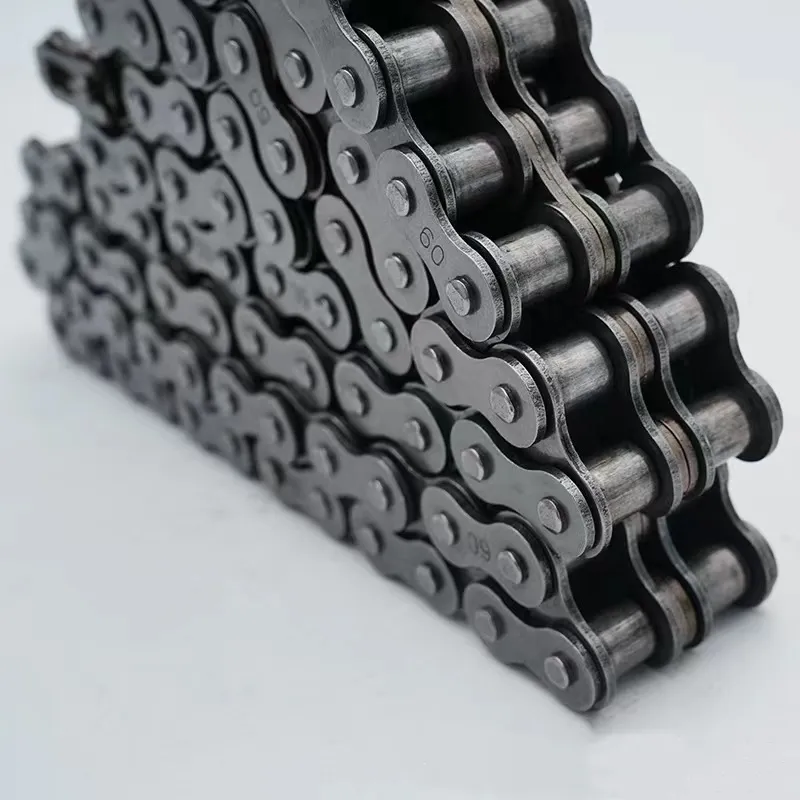
This series is typically applied as a gathering chain or conveyor chain. It features a straight sidebar for increased strength and better conveying ability, and this is the most common type of agricultural roller chain. We also build various kinds of attachments to meet clients’ needs.
The JJ CA-Type chain’s advantages:
Solid rollers enhance rotation on the bushing while reducing impact loads on the sprocket tooth during operation.
All components are heat treated to achieve maximum strength.
Pre-loaded during the manufacturing process to minimize initial elongation.
Hot dipped lubrication ensures 100% lubrication of all chain components to extend wear life and reduce maintenance costs.
| CHAIN NO. |
PITCH | BUSH WIDTH |
ROLLER DIA |
PIN | PLATE | MAX. TENSILE STRENGTH |
WEIGHT | ||||
| D | L | Lc | H | T1 | T2 | ||||||
| mm | mm | mm | mm | mm | mm | mm | mm | mm | KN/min | kg/m | |
| CA550 | 41.40 | 19.81 | 16.70 | 7.16 | 35.30 | 38.20 | 19.05 | 2.70 | 2.70 | 39.8 | 1.94 |
| CA555 | 41.40 | 12.50 | 16.86 | 7.19 | 30.35 | 33.48 | 20.17 | 3.18 | 3.18 | 39.8 | 1.72 |
| CA557 | 41.40 | 20.14 | 17.78 | 7.94 | 37.60 | 40.00 | 23.10 | 3.18 | 3.18 | 55.8 | 2.60 |
| CA620 | 42.01 | 25.07 | 17.68 | 7.16 | 41.50 | 45.00 | 19.05 | 3.15 | 3.15 | 39.8 | 2.35 |
| CA650H | 41.40 | 19.81 | 16.70 | 7.16 | 36.18 | 39.00 | 19.05 | 3.00 | 3.00 | 39.8 | 2.24 |
| CA2060H | 38.10 | 12.70 | 11.91 | 5.94 | 28.80 | 31.70 | 18.00 | 3.25 | 3.25 | 31.1 | 1.45 |
| 384V | 38.40 | 18.00 | 15.88 | 6.92 | 35.10 | 38.40 | 17.20 | 3.00 | 3.00 | 33.8 | 1.83 |
| 384VB | 38.40 | 19.00 | 15.88 | 8.28 | 35.80 | 38.80 | 20.50 | 3.00 | 3.00 | 50.8 | 2.17 |
| Usage: | Transmission Chain, Drag Chain, Conveyor Chain, Dedicated Special Chain, Roller Chain |
|---|---|
| Material: | Alloy/Carbon Steel |
| Surface Treatment: | Polishing |
| Feature: | Heat Resistant |
| Chain Size: | 1 1/2"*1 5/8" |
| Structure: | Roller Chain |
| Samples: |
US$ 10/Meter
1 Meter(Min.Order) | |
|---|
| Customization: |
Available
| Customized Request |
|---|
How do roller chains handle variable speed applications?
Roller chains are well-suited for variable speed applications due to their inherent design characteristics. Here’s a detailed answer to the question:
1. Speed Range: Roller chains can accommodate a wide range of speeds, making them suitable for variable speed applications. The speed of the driven sprocket can be adjusted, and the chain will adapt to the changing speed requirements.
2. Smooth Power Transmission: Roller chains provide smooth and consistent power transmission even at varying speeds. The engagement between the chain and the sprockets remains constant, ensuring reliable power transfer without slippage or loss of efficiency.
3. Tension Adjustment: In variable speed applications, the tension of the roller chain may need to be adjusted to maintain optimal performance. Proper tension ensures proper engagement with the sprockets and prevents excessive wear or elongation of the chain.
4. Lubrication: Adequate lubrication is crucial for roller chains in variable speed applications. Lubrication helps reduce friction, wear, and heat generation, ensuring smooth operation and extending the chain’s lifespan. Depending on the speed range and operating conditions, the appropriate lubrication method and frequency should be determined.
5. Chain Selection: Selecting the right type and size of roller chain is important for variable speed applications. Different chain designs and materials may have specific speed limitations or performance characteristics. Consulting the manufacturer’s specifications and recommendations can help ensure the chain’s compatibility with the required speed range.
6. System Design Considerations: When designing variable speed applications with roller chains, factors such as sprocket sizes, drive ratios, and load requirements should be carefully considered. Proper sizing and alignment of the sprockets, as well as selecting the appropriate chain pitch, can contribute to the smooth operation and longevity of the system.
It’s important to note that proper maintenance, including regular inspection, lubrication, and tension adjustment, is essential for roller chains in variable speed applications. Monitoring the chain’s condition and addressing any signs of wear or damage promptly will help ensure safe and reliable operation.
What are the advantages of using a roller chain over a timing belt?
Roller chains and timing belts are both commonly used for power transmission in various applications. Here’s a detailed answer to the question:
Advantages of using a roller chain:
1. Higher Load Capacity: Roller chains are capable of handling higher loads compared to timing belts. They are designed to transmit power in heavy-duty applications where high torque and shock loads are present.
2. Flexibility in Power Transmission: Roller chains are more versatile in terms of power transmission. They can transmit power over longer distances and are suitable for applications that require multiple shafts and complex power transmission routes.
3. Tolerance to Misalignment: Roller chains can tolerate more misalignment between the driving and driven sprockets compared to timing belts. They can accommodate slight angular misalignments and axial movements, making them suitable for applications where alignment precision is challenging.
4. Resistance to Harsh Environments: Roller chains are generally more resistant to contaminants, such as dirt, dust, and debris, compared to timing belts. They are commonly used in applications where exposure to harsh environments, such as high temperatures, chemicals, or abrasive particles, is expected.
5. Easy Maintenance and Replacement: Roller chains are relatively easy to maintain and replace. Regular lubrication, tension adjustment, and periodic inspection can help prolong their lifespan. In case of wear or damage, individual chain links can be replaced without the need for replacing the entire chain, making maintenance more cost-effective.
It’s important to note that the choice between a roller chain and a timing belt depends on various factors, including the specific application requirements, load conditions, speed, accuracy, and environmental considerations. Consulting with experts and considering the specific needs of the application can help determine the most suitable power transmission solution.


editor by CX 2023-08-15