
Product Description
Carbon Steel Roller Chain for Machines
1. Standards: ISO /DIN /ANSI
2. Model: 35-160, 04B-32B Simplex, Duplex, Triplex, Heavy duty
3. Materials: Carbon steel 40Mn
4. All parts are heat treatment(quenching and tempering) and controlled in a reasonable tolerance range.
5. Tensile strength: 15-20% higher than the standard
6. Certificate of Quality: ISO 9001, SGS
7. Centreless grinding.
8. Good lubrication with excellent grease.
9. Color: Self, dark yellow, dark blue, black
Products are made of high quality alloy steel production. The plates are punched and squeezed bores by precision technology. The pin, bush, roller are machined by high-efficiency automatic equipment and automatic grinding equipment, then through heat treatment of carburization, carbon and nitrogen protection mesh belt furnace, surface blasting process etc. Assembled precision by Internal hole position, spin riveted by pressure to ensure the performance of the entire chain.
Specifications
| Technique Treatment | |||
| 1 | Shot Peening | 8 | Tempering |
| 2 | Bluing | 9 | Oiling |
| 3 | Nickel-plated | 10 | Greasing |
| 4 | Zincing | 11 | Special color |
| 5 | Heat Treatment | 12 | Stain proofing |
| 6 | Carburizing | 13 | Pre-stretched and anti-fatigue |
| 7 | Quenching | ||
Our Service
1. Any of your kind inquiry conveyor chain would be replied within 24 hours.
2. Well-trained and experienced sales staffs will reply all your concerns in fluent English.
3. OEM services are available with us, our professional designer would make your private idea into being.
4. Protection of your sales area, ideas of design and all your private information.
5. Delivery by air mail or ship for your orders.
Why choose us
1. We are the manufacture.
2. We have near 30 years experience of making chains and chain links.
3. Our design team has extensive experience in the chain design.
4. Best service and prompt delivery.
5. We offer various styles, size and colors to meet your requirement.
6. We covering a production area of 18750 square CHINAMFG have more than 100 employees and we have a complete set of testing equipment to ensure our quality.
/* January 22, 2571 19:08:37 */!function(){function s(e,r){var a,o={};try{e&&e.split(“,”).forEach(function(e,t){e&&(a=e.match(/(.*?):(.*)$/))&&1
| Usage: | Transmission Chain |
|---|---|
| Material: | Alloy/Carbon Steel |
| Surface Treatment: | Polishing/Electroplating/Oxygenation |
| Feature: | Oil Resistant |
| Chain Size: | 25 to 200 / 04b to 40b |
| Structure: | Roller Chain |
| Samples: |
US$ 4/Meter
1 Meter(Min.Order) | |
|---|
| Customization: |
Available
| Customized Request |
|---|
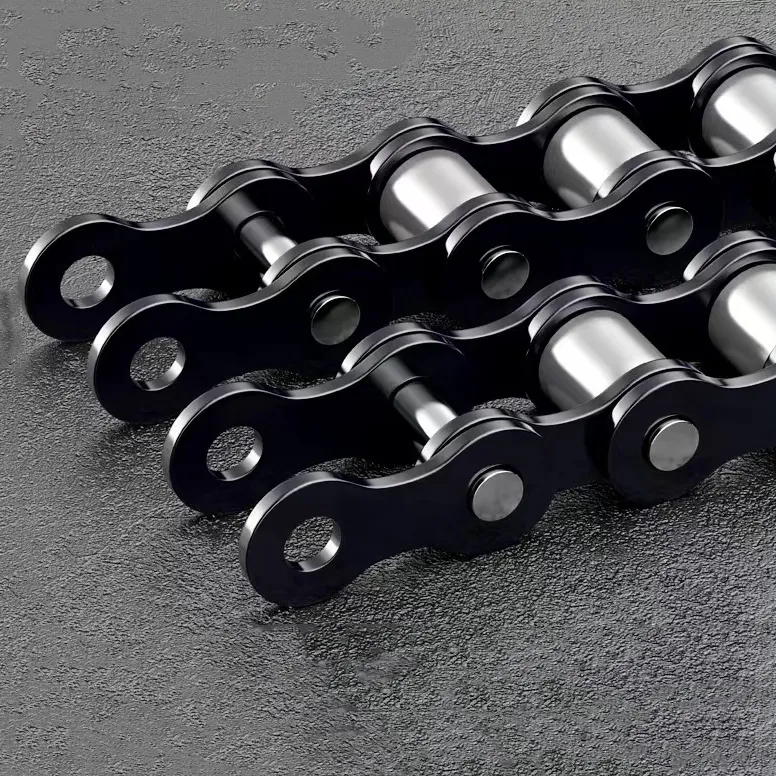
Can roller chains be used for overhead or inverted applications?
Roller chains can be used for overhead or inverted applications, but there are certain considerations to keep in mind. Here’s a detailed answer to the question:
1. Lubrication: In overhead or inverted applications, proper lubrication is crucial to ensure smooth operation and prevent premature wear. Gravity can affect the distribution of lubricant within the chain, so it’s important to use a lubrication method that can effectively reach all the critical components.
2. Tensioning: In overhead or inverted applications, the tensioning of the roller chain becomes even more important. The chain should be properly tensioned to prevent sagging or excessive slack, which can lead to uneven load distribution, chain skipping, or disengagement from the sprockets.
3. Environmental Considerations: Overhead or inverted applications may expose the roller chain to environmental factors such as dust, debris, moisture, or temperature variations. It’s important to select a roller chain that is designed to withstand the specific environmental conditions and provides adequate protection against corrosion, contamination, and wear.
4. Sprocket Alignment: Proper sprocket alignment is critical for the smooth operation of roller chains in overhead or inverted applications. Misalignment can result in chain binding, increased friction, and premature wear. Regular inspection and adjustment of the sprocket alignment are necessary to maintain optimal performance.
5. Chain Design: Depending on the specific requirements of the overhead or inverted application, specialized roller chain designs may be available. These designs may include features such as sealed joints, self-lubricating capabilities, or corrosion-resistant coatings to enhance performance and reliability in such applications.
By considering these factors and selecting a roller chain specifically designed for overhead or inverted applications, it is possible to achieve reliable and efficient power transmission in these challenging orientations.
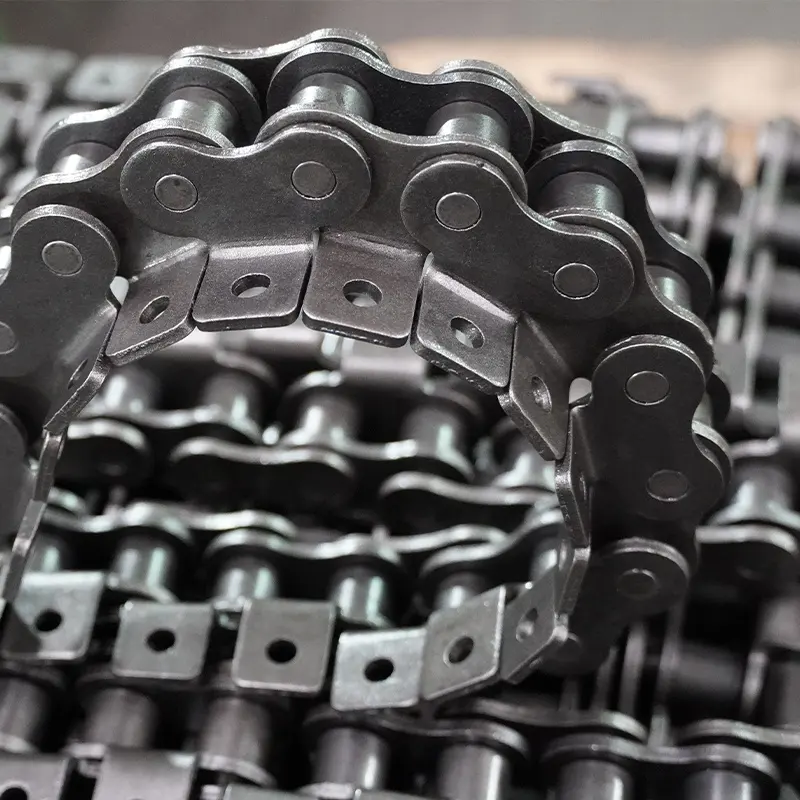
How do roller chains handle angular misalignment between sprockets?
Roller chains are designed to accommodate a certain degree of angular misalignment between sprockets. Here’s a detailed answer to the question:
1. Flexibility: Roller chains have inherent flexibility, allowing them to adapt to slight misalignments between sprockets. The chain links can articulate and adjust their position to compensate for the angular misalignment. This flexibility helps to reduce stress on the chain and the sprockets.
2. Chain Articulation: The individual chain links in a roller chain are connected by pins, allowing them to rotate and articulate as the chain engages with the sprockets. This articulation enables the chain to follow the angular movement of the sprockets and maintain proper engagement. It helps to distribute the load evenly across the chain and minimize concentrated stresses on individual chain links.
3. Tolerance for Misalignment: Roller chains have a certain tolerance for angular misalignment between the sprockets. The exact amount of misalignment that a chain can handle depends on factors such as chain size, pitch, and design. However, it’s important to note that excessive misalignment can lead to accelerated wear, increased noise, and reduced chain life.
4. Proper Alignment: While roller chains can tolerate some degree of angular misalignment, it’s still essential to aim for proper sprocket alignment whenever possible. Proper alignment helps to optimize chain performance, minimize wear, and extend the lifespan of the chain and sprockets. Aligning the sprockets correctly ensures that the chain engages smoothly and uniformly with the sprocket teeth, reducing the risk of premature wear or failure.
5. Regular Inspection and Maintenance: To ensure optimal performance and longevity, it’s important to regularly inspect the roller chain system for any signs of misalignment or excessive wear. Routine maintenance, such as lubrication and tension adjustment, helps to mitigate the effects of misalignment and promotes smooth operation.
While roller chains can handle a certain degree of angular misalignment, it’s always recommended to minimize misalignment and strive for proper sprocket alignment to ensure optimal performance, efficiency, and longevity of the chain and sprocket system.
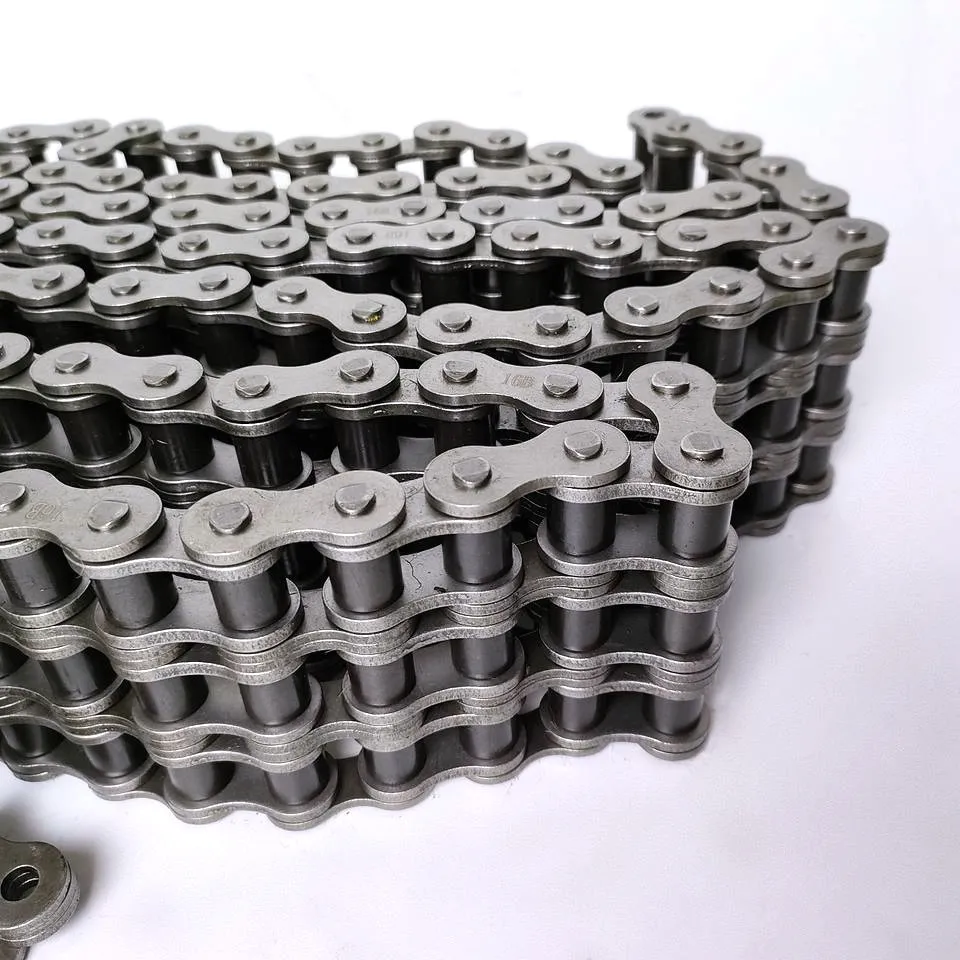
What are some common misconceptions about roller chains?
There are several misconceptions about roller chains that are worth addressing. Here are some common ones:
1. Roller chains are maintenance-free: While some roller chains are designed for reduced maintenance, no chain is truly maintenance-free. All roller chains require regular inspection, lubrication, and occasional replacement to ensure optimal performance and longevity.
2. Roller chains are indestructible: Roller chains are durable and can handle significant loads, but they are not indestructible. Like any mechanical component, roller chains have their limits and can fail if subjected to excessive loads, poor lubrication, misalignment, or other adverse conditions.
3. Any lubricant can be used on roller chains: Using the wrong type or insufficient amount of lubricant can negatively impact the performance and lifespan of a roller chain. It is important to follow the manufacturer’s recommendations regarding lubrication to ensure proper chain operation and longevity.
4. All roller chains are the same: Roller chains come in various designs, sizes, and materials to suit different applications. It is essential to select the right chain for the specific application based on factors such as load capacity, speed, environment, and operating conditions.
5. Roller chains cannot handle high speeds: While roller chains may have speed limitations, advancements in design and materials have allowed for the development of high-speed roller chains. These chains are specifically engineered to withstand the demands of high-speed applications.
6. Roller chains are noisy: While poorly maintained or misaligned roller chains can produce noise, properly lubricated and aligned chains can operate quietly. Regular maintenance, including proper lubrication and tensioning, can minimize noise levels and ensure smooth chain operation.
7. Roller chains require constant adjustment: With proper installation and tensioning, roller chains should not require frequent adjustments. However, regular inspection and occasional adjustment are necessary to maintain proper tension and prevent excessive wear.
It is important to rely on accurate information and consult experts or manufacturers when it comes to roller chain selection, installation, maintenance, and troubleshooting to avoid falling prey to common misconceptions and ensure optimal chain performance.


editor by CX 2024-04-11