
Product Description
| Chain No | Pitch | Width Between Inner Plates |
Pin Dia |
Pin Length |
Inner Plate Depth |
Average Tensile Strength |
Weight |
| Mm | mm | mm | mm | mm | mm | Kn | kg/m |
| 04B-1 | 6.000 | 2.80 | 1.85 | 6.80 | 5.00 | 3.2 | 0.11 |
| 05B-1 | 8.000 | 3.00 | 2.31 | 8.20 | 7.10 | 5.9 | 0.20 |
| *06B-1 | 9.525 | 5.72 | 3.28 | 13.15 | 8.20 | 10.4 | 0.41 |
| 08B-1 | 12.700 | 7.75 | 4.45 | 16.70 | 11.80 | 19.40 | 0.69 |
| 10B-1 | 15.875 | 9.65 | 5.09 | 19.50 | 14.70 | 27.50 | 0.93 |
| 12B-1 | 19.050 | 11.68 | 5.72 | 22.50 | 16.00 | 32.20 | 1.15 |
| 16B-1 | 25.400 | 17.02 | 8.28 | 36.10 | 21.00 | 72.80 | 2.71 |
| 20B-1 | 31.750 | 19.56 | 10.19 | 41.30 | 26.40 | 106.7 | 3.70 |
| 24B-1 | 38.100 | 25.40 | 14.63 | 53.40 | 33.20 | 178.0 | 7.10 |
| 28B-1 | 44.450 | 30.99 | 15.90 | 65.10 | 36.70 | 222.0 | 8.50 |
| 32B-1 | 50.800 | 30.99 | 17.81 | 66.00 | 42.00 | 277.5 | 10.25 |
| 40B-1 | 63.50 | 38.10 | 22.89 | 82.20 | 52.96 | 394.0 | 16.35 |
| 48B-1 | 76.20 | 45.72 | 29.24 | 99.10 | 63.80 | 621.6 | 25.00 |
| 56B-1 | 88.90 | 53.34 | 34.32 | 114.60 | 77.80 | 940.0 | 35.78 |
Our company offers variety of products which can meet your multifarious demands. We adhere to the management principles of “quality first, customer first and credit-based” since the establishment of the company and always do our best to satisfy potential needs of our customers. Our company is sincerely willing to cooperate with enterprises from all over the world in order to realize a CHINAMFG situation since the trend of economic globalization has developed with anirresistible force.
/* January 22, 2571 19:08:37 */!function(){function s(e,r){var a,o={};try{e&&e.split(“,”).forEach(function(e,t){e&&(a=e.match(/(.*?):(.*)$/))&&1
| Standard or Nonstandard: | Standard |
|---|---|
| Application: | Food Machinery |
| Structure: | Roller Chain |
| Material: | Stainless Steel |
| Type: | Double Pitch Chain |
| Tensile Strength: | High |
| Customization: |
Available
| Customized Request |
|---|
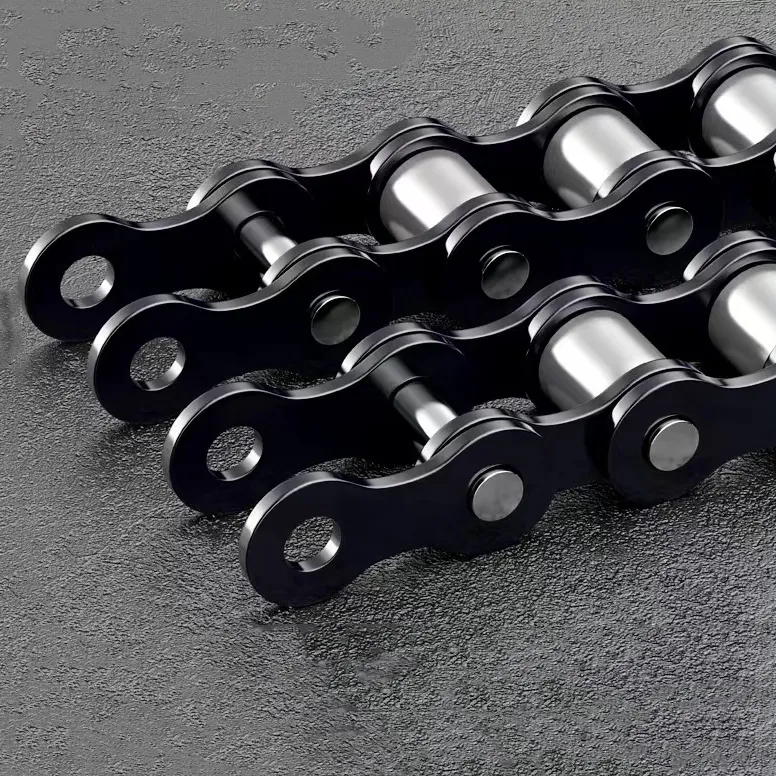
Can roller chains be used for overhead or inverted applications?
Roller chains can be used for overhead or inverted applications, but there are certain considerations to keep in mind. Here’s a detailed answer to the question:
1. Lubrication: In overhead or inverted applications, proper lubrication is crucial to ensure smooth operation and prevent premature wear. Gravity can affect the distribution of lubricant within the chain, so it’s important to use a lubrication method that can effectively reach all the critical components.
2. Tensioning: In overhead or inverted applications, the tensioning of the roller chain becomes even more important. The chain should be properly tensioned to prevent sagging or excessive slack, which can lead to uneven load distribution, chain skipping, or disengagement from the sprockets.
3. Environmental Considerations: Overhead or inverted applications may expose the roller chain to environmental factors such as dust, debris, moisture, or temperature variations. It’s important to select a roller chain that is designed to withstand the specific environmental conditions and provides adequate protection against corrosion, contamination, and wear.
4. Sprocket Alignment: Proper sprocket alignment is critical for the smooth operation of roller chains in overhead or inverted applications. Misalignment can result in chain binding, increased friction, and premature wear. Regular inspection and adjustment of the sprocket alignment are necessary to maintain optimal performance.
5. Chain Design: Depending on the specific requirements of the overhead or inverted application, specialized roller chain designs may be available. These designs may include features such as sealed joints, self-lubricating capabilities, or corrosion-resistant coatings to enhance performance and reliability in such applications.
By considering these factors and selecting a roller chain specifically designed for overhead or inverted applications, it is possible to achieve reliable and efficient power transmission in these challenging orientations.
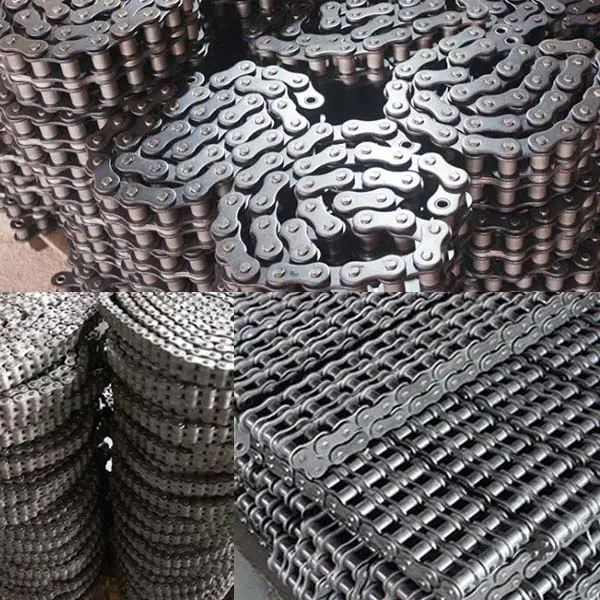
How do roller chains handle reverse motion?
Roller chains are capable of handling reverse motion in applications where the direction of movement needs to be reversed. Here’s a detailed answer to the question:
1. Bi-Directional Operation: Roller chains are designed to operate in both forward and reverse directions. The chain links and rollers are constructed to engage with the sprockets in either direction, allowing the chain to smoothly transfer power and motion.
2. Engagement with Sprockets: When the roller chain is in reverse motion, the rollers on the chain engage with the sprocket teeth in the opposite direction compared to forward motion. The engagement between the chain and the sprockets ensures a secure and reliable power transmission, allowing the chain to efficiently transfer motion in reverse.
3. Lubrication and Maintenance: Proper lubrication is essential for the smooth operation of roller chains, including during reverse motion. Adequate lubrication reduces friction and wear, ensuring the chain’s longevity and performance. Regular maintenance, including lubrication and inspection, helps identify any issues that may affect the chain’s ability to handle reverse motion and allows for timely corrective actions.
4. Proper Tensioning: Maintaining proper tension in the roller chain is crucial for its performance in both forward and reverse motion. Adequate tension ensures the chain remains engaged with the sprockets and prevents slippage or disengagement during reverse operation. Proper tensioning can be achieved through tensioning devices or adjustable mounting arrangements.
5. Load Capacity: Roller chains are designed to handle various loads, including reverse motion. However, it’s important to consider the specific application requirements and select a roller chain with the appropriate load capacity and strength to withstand the forces experienced during reverse operation.
6. Alignment and Installation: Proper alignment of the roller chain and the sprockets is essential for reliable performance in both forward and reverse motion. Ensuring correct installation, including proper alignment and tensioning, helps maintain the chain’s engagement with the sprockets and ensures smooth operation in reverse.
It’s worth noting that the specific application requirements, such as speed, load, environmental conditions, and the type of roller chain, should be considered when determining the suitability of roller chains for reverse motion. Consulting the manufacturer’s guidelines and recommendations is important to ensure proper selection, installation, and maintenance of roller chains in applications involving reverse operation.
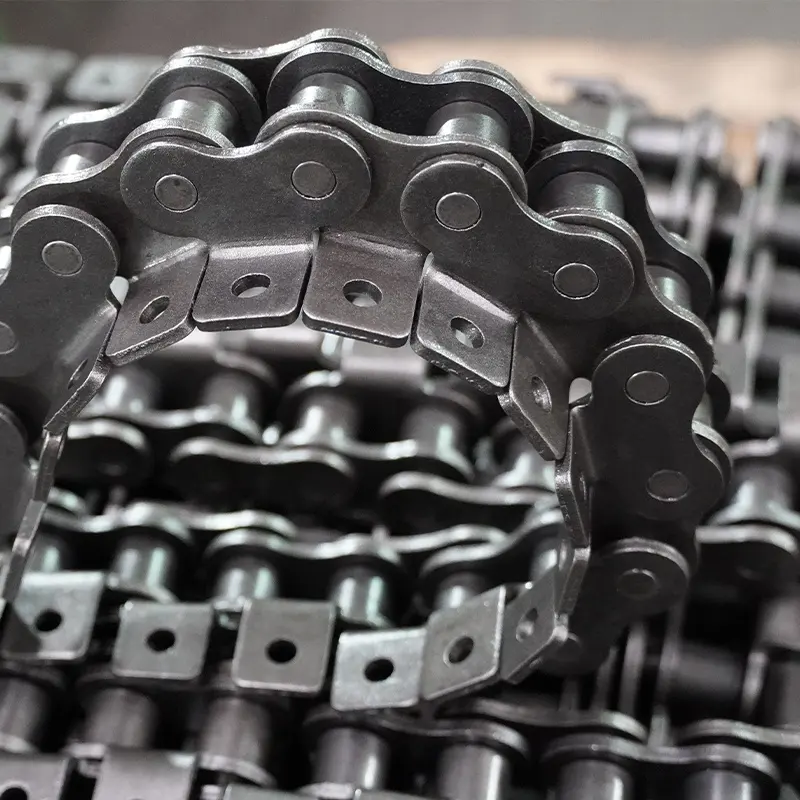
Can roller chains be repaired or must they be replaced?
When it comes to roller chains, repair options are limited, and in most cases, replacement is recommended. Here’s a detailed answer to the question:
1. Limited Repair Options: Roller chains are typically not designed to be easily repaired. The individual components of the chain, such as the pins, bushings, and rollers, undergo wear and fatigue over time, making it difficult to restore the chain to its original condition through repair.
2. Safety Considerations: Roller chains play a critical role in transmitting power and ensuring the safe operation of machinery or equipment. Any repair attempt that compromises the chain’s integrity or reduces its load-carrying capacity can pose safety risks. Therefore, it is generally recommended to replace worn or damaged roller chains to maintain the highest level of safety.
3. Cost-Effectiveness: In most cases, replacing a worn or damaged roller chain is more cost-effective than attempting to repair it. The cost of labor, specialized tools, and the uncertainty of the repaired chain’s performance and lifespan make replacement a more viable option.
4. System Integration: Roller chains are often part of a larger system or machinery. In some cases, repairing a single chain link or component may disrupt the system’s overall performance and cause compatibility issues. Replacing the chain ensures proper integration and avoids potential complications.
While repair options for roller chains are limited, regular inspection and maintenance can help identify wear or damage early on. Timely replacement of worn or damaged chains is crucial to prevent unexpected failures, reduce downtime, and maintain the efficiency and safety of the machinery or equipment.


editor by CX 2024-03-29