
Product Description
High Quality Motorcycle Conveyor Roller Chain Stainless Steel Professional China Factory Supply (ANSI, BS, DIN, JIS Standard)
Product Description
1. Material: Stainless steel / Alloy steel / Made to order
2. Surface Treatment: Zinc-Plated / Nickel-Plated / Shot Peening / Blackening
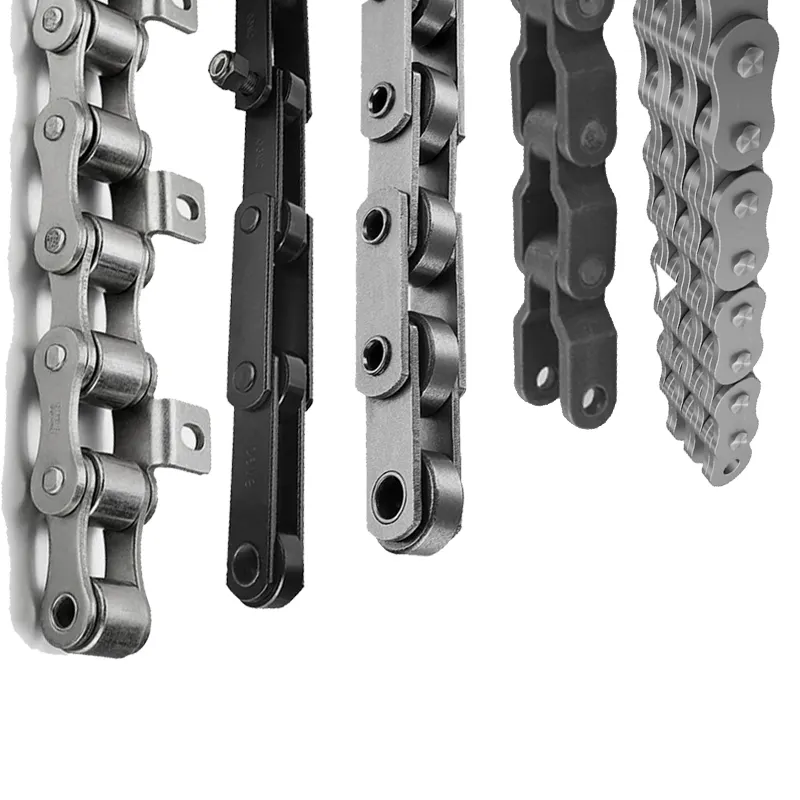
3. Chain Type: Roller chains, Drive chains,Conveyor Chains, Hollow Pin Chains,Welded chains, Steel Pin Chains, Palm oil chains,Sugar Mill Chains.ect.
4. Application: Chains is a very important industry parts, The many industry will be use chain. For examples Sugar mill ,Steel mill,Cement mill, Palm oil mill and more. thus the chain is industrial family main member.
5. “PLW” Company Purpose : Powering Your Business Worldswide. Driving the word and future.
| Product name | High Quality Motorcycle Conveyor Roller Chain Stainless Steel Professional China Factory Supply (ANSI, BS, DIN, JIS Standard) |
| Chain Type | 1. Driving Chain (roller chain, Heavy Duty Cranked-Link,Bushing Chains etc) |
| 2. Conveyor Chain( Double Pitch chains,,MT & MC Series etc) | |
| 3. Hollow Pin Chain | |
| 4. Palm Oil Chain | |
| 5. Sugar Mill Chain | |
| 6. Welded Steel Chain | |
| 7. Rubber Glove Chain | |
| Surface Treatment | Shot peening, Blackening, Oxygenation, Polishing, Zinc-plated, Nickel-plated, Anodized, etc. |
| Characteristic | Fire Resistant, Oil Resistant, Heat Resistant |
| Design criterion | ISO DIN ANSI & Customer’s Drawing |
| Size | Customer’s Drawing & ISO Standard |
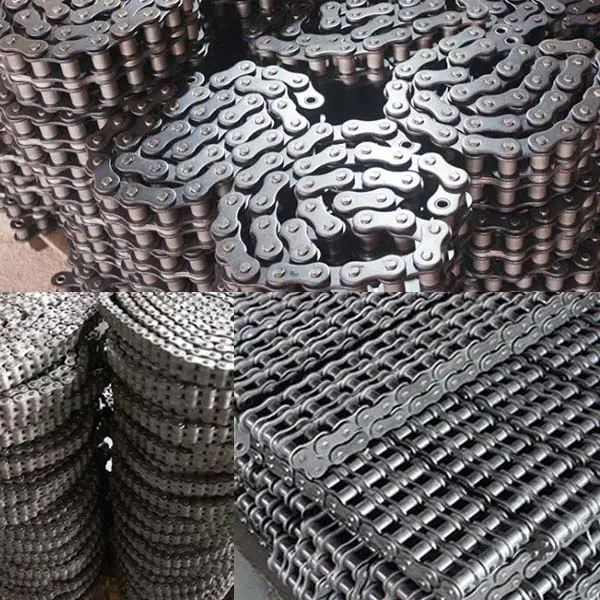
| Package | Wooden Case / Container and pallet, or made-to-order |
| Certificate | ISO9001: 2008 |
| Advantage | First quality, Best Service, Competitive price, Fast delivery |
| Delivery Time | 20 days for samples. 45 days for official order. |
View more products,please click here…
Company Profile
| Material: | Steel or Stainless Steel etc |
|---|---|
| Structure: | Chain |
| Surface Treatment: | Shot Peening, Blackening, Oxygenation, Polishing, |
| Chain Size: | All of The Chain |
| Feature: | Fire Resistant, Heat Resistant |
| Transport Package: | Plastic Bag+Box+Plywood Case |
| Samples: |
US$ 0/Meter
1 Meter(Min.Order) | |
|---|
| Customization: |
Available
| Customized Request |
|---|
Can roller chains be used for power transmission in bicycles?
Yes, roller chains are commonly used for power transmission in bicycles. Here’s a detailed answer to the question:
Roller chains are an integral component of bicycle drivetrains, transmitting power from the pedals to the rear wheel. They offer several advantages that make them well-suited for this application:
1. Efficient Power Transfer: Roller chains provide efficient power transfer from the rider’s pedaling force to the rear wheel of the bicycle. They have low frictional losses, allowing for a smooth and efficient transfer of energy, resulting in better propulsion and improved performance.
2. High Strength and Durability: Roller chains used in bicycles are designed to withstand the forces exerted during pedaling and the varying loads encountered during riding. They are constructed using high-quality materials and precise manufacturing techniques to ensure strength and durability.
3. Lightweight: Roller chains used in bicycles are lightweight, contributing to the overall weight reduction of the bike. This is important for cyclists as it allows for faster acceleration, easier maneuverability, and enhanced handling.
4. Versatility: Roller chains are available in various sizes and configurations, allowing them to be used in different types of bicycles. Whether it’s a road bike, mountain bike, or city bike, roller chains can be adapted to suit the specific requirements of the bike’s drivetrain.
5. Easy Maintenance: Roller chains in bicycles require regular maintenance to ensure optimal performance and longevity. Proper lubrication and periodic cleaning are essential to prevent wear and corrosion. Fortunately, bicycle chains are relatively easy to maintain and can be readily accessed for cleaning and lubrication.
6. Cost-Effective Solution: Roller chains offer a cost-effective solution for power transmission in bicycles. They are affordable and widely available, making them a practical choice for bike manufacturers and cyclists alike.
In summary, roller chains are commonly used for power transmission in bicycles due to their efficient power transfer, strength, durability, lightweight nature, versatility, ease of maintenance, and cost-effectiveness. They play a crucial role in ensuring a smooth and reliable ride for cyclists of all types and skill levels.
How do roller chains handle reverse motion?
Roller chains are capable of handling reverse motion in applications where the direction of movement needs to be reversed. Here’s a detailed answer to the question:
1. Bi-Directional Operation: Roller chains are designed to operate in both forward and reverse directions. The chain links and rollers are constructed to engage with the sprockets in either direction, allowing the chain to smoothly transfer power and motion.
2. Engagement with Sprockets: When the roller chain is in reverse motion, the rollers on the chain engage with the sprocket teeth in the opposite direction compared to forward motion. The engagement between the chain and the sprockets ensures a secure and reliable power transmission, allowing the chain to efficiently transfer motion in reverse.
3. Lubrication and Maintenance: Proper lubrication is essential for the smooth operation of roller chains, including during reverse motion. Adequate lubrication reduces friction and wear, ensuring the chain’s longevity and performance. Regular maintenance, including lubrication and inspection, helps identify any issues that may affect the chain’s ability to handle reverse motion and allows for timely corrective actions.
4. Proper Tensioning: Maintaining proper tension in the roller chain is crucial for its performance in both forward and reverse motion. Adequate tension ensures the chain remains engaged with the sprockets and prevents slippage or disengagement during reverse operation. Proper tensioning can be achieved through tensioning devices or adjustable mounting arrangements.
5. Load Capacity: Roller chains are designed to handle various loads, including reverse motion. However, it’s important to consider the specific application requirements and select a roller chain with the appropriate load capacity and strength to withstand the forces experienced during reverse operation.
6. Alignment and Installation: Proper alignment of the roller chain and the sprockets is essential for reliable performance in both forward and reverse motion. Ensuring correct installation, including proper alignment and tensioning, helps maintain the chain’s engagement with the sprockets and ensures smooth operation in reverse.
It’s worth noting that the specific application requirements, such as speed, load, environmental conditions, and the type of roller chain, should be considered when determining the suitability of roller chains for reverse motion. Consulting the manufacturer’s guidelines and recommendations is important to ensure proper selection, installation, and maintenance of roller chains in applications involving reverse operation.
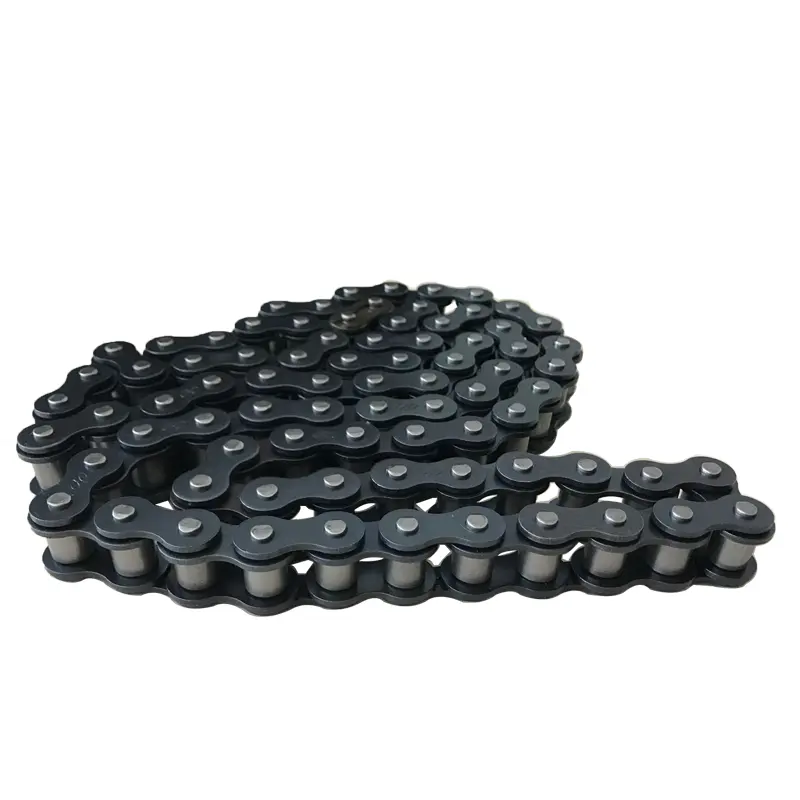
How do roller chains compare to belt drives in terms of efficiency?
Roller chains and belt drives are both widely used power transmission systems, but they differ in terms of efficiency. Here’s a detailed answer to the question:
1. Mechanical Efficiency: Roller chains generally have higher mechanical efficiency compared to belt drives. The engagement between the chain and sprockets provides a positive drive with minimal slippage, resulting in efficient power transfer. Belt drives, on the other hand, can experience some slip, especially in high-torque or heavy-load applications, leading to lower efficiency.
2. Size and Length: Roller chains are typically more compact and have a shorter pitch length compared to belt drives. This allows for more compact machine design and closer shaft spacing, reducing the overall size and weight of the power transmission system.
3. Load Capacity: Roller chains are known for their high load-carrying capacity, making them suitable for heavy-duty applications. They can handle high loads and transmit significant amounts of power without compromising performance. Belt drives have lower load-carrying capacity and are more commonly used in lighter-duty applications.
4. Speed and Torque: Roller chains are suitable for both high-speed and high-torque applications. They can operate at high rotational speeds while transmitting significant torque. Belt drives, on the other hand, may have limitations in terms of speed and torque capacity, especially in demanding applications.
5. Maintenance and Durability: Roller chains require regular lubrication and maintenance to ensure optimal performance and longevity. Belt drives, on the other hand, are generally considered maintenance-free. However, if a belt drive becomes misaligned or experiences excessive wear, it may need to be replaced entirely. Roller chains, with proper maintenance, can be more durable and have longer service life.
It’s important to note that the choice between roller chains and belt drives depends on various factors, including the specific application requirements, load conditions, speed requirements, and space constraints. Each system has its advantages and considerations, and selecting the most suitable option should be based on a careful evaluation of these factors.


editor by CX 2023-11-03