
Product Description
Detailed Photos
Product Description
| Item Name | Standrad transmission Roller Chains | Model | Series A, Series B |
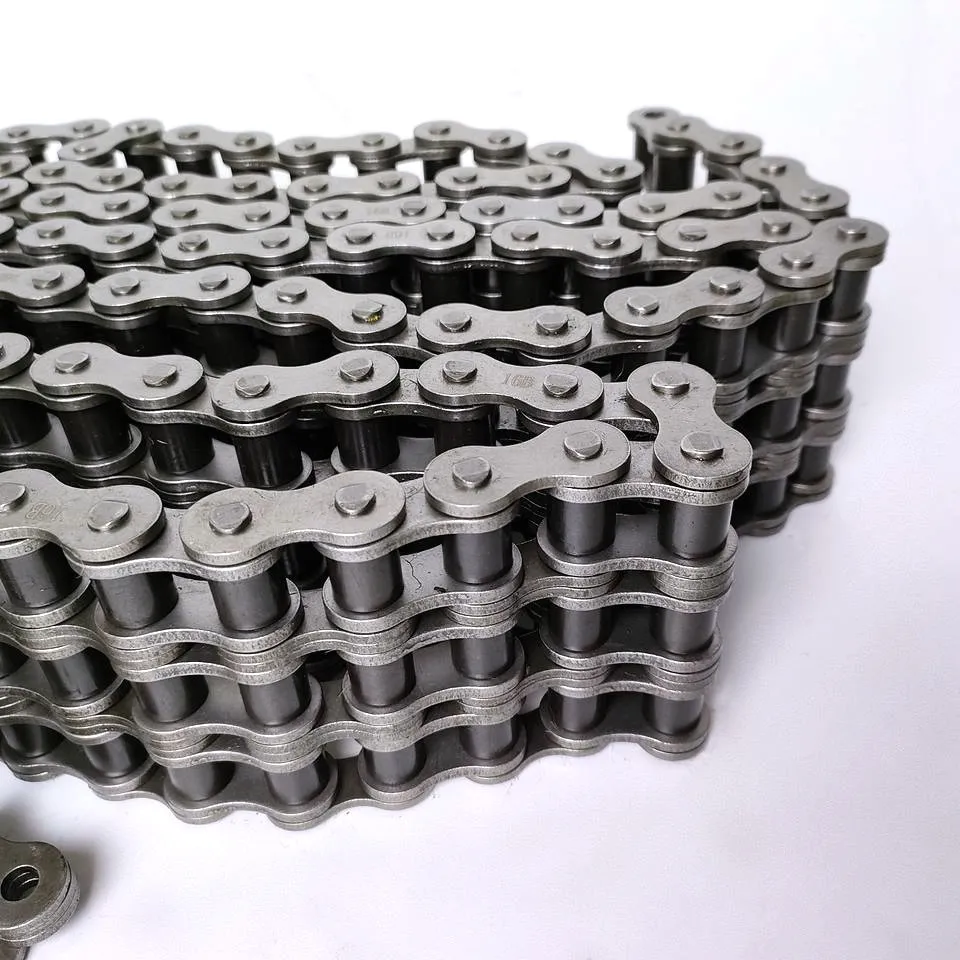
| Row | Simplex Duplex Triplrex |
Application | Machinery Parts |
| Suiface Treament | netural/sand-blasted/shot-peening | Certification | ISO, ANSI, DIN, BS |
| Packing | Packaged in boxes and wooden cases, or packaged in reels and then on pallets | Port | Any sea port or airport in china |
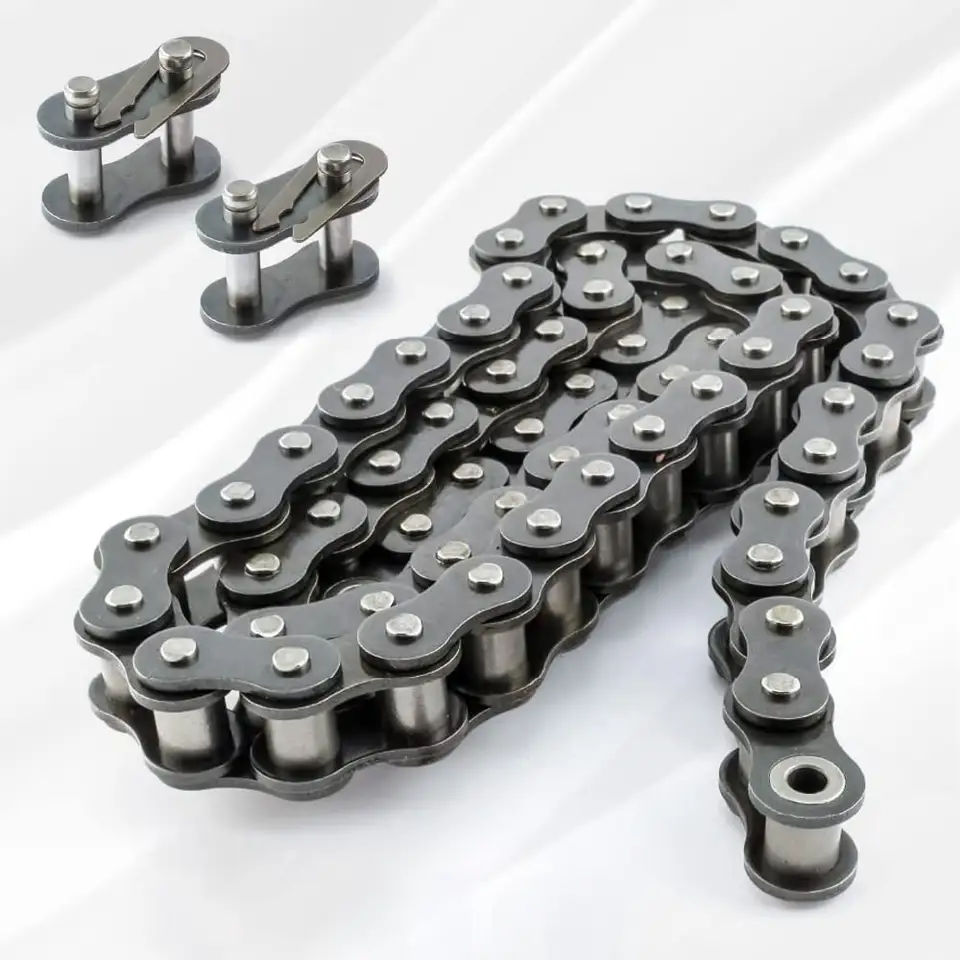
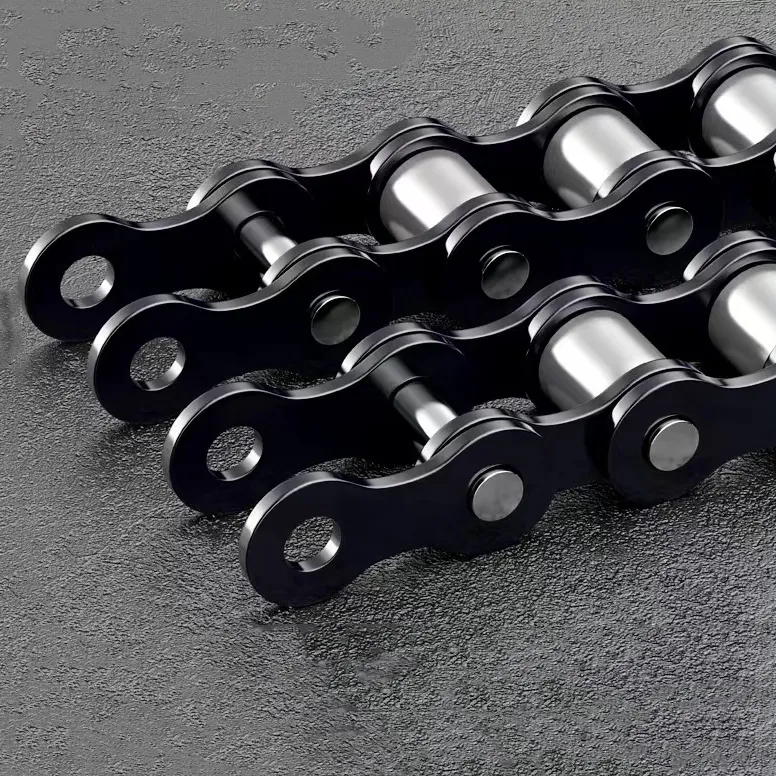
Standard roller chains are a type of industrial chain that is commonly used in power transmission
applications. They consist of a series of cylindrical rollers that are linked together by side plates.
The rollers rotate within the links, transmitting power from 1 sprocket to another.
Standard roller chains are available in a range of sizes and configurations to fit different industrial
applications. They are made from high-quality materials, such as carbon steel or stainless steel,
which are resistant to wear, corrosion, and fatigue.
These chains are designed to provide smooth and efficient power transmission, with minimal energy
loss. They have a high load-bearing capacity, making them suitable for use in heavy-duty machinery,
such as conveyors, elevators, and industrial equipment.
Standard roller chains are also easy to install and maintain, with simple lubrication requirements to
ensure long-lasting performance. Overall, they offer a reliable and cost-effective solution for power
transmission in a wide range of industrial applications.
Other Products
Company Profile
Packaging & Shipping
After Sales Service
/* January 22, 2571 19:08:37 */!function(){function s(e,r){var a,o={};try{e&&e.split(“,”).forEach(function(e,t){e&&(a=e.match(/(.*?):(.*)$/))&&1
| Standard or Nonstandard: | Standard |
|---|---|
| Application: | Textile Machinery, Garment Machinery, Conveyer Equipment, Packaging Machinery, Electric Cars, Motorcycle, Food Machinery, Mining Equipment, Agricultural Machinery |
| Surface Treatment: | Netural/Sand-Blasted/Shot-Peening |
| Material: | Carbon Steel |
| Type: | Short Pitch Chain |
| Surface: | Shot Peening, Black, Blue or Original |
| Samples: |
US$ 1.28/Meter
1 Meter(Min.Order) | |
|---|
| Customization: |
Available
| Customized Request |
|---|
How do roller chains handle dusty or dirty environments?
Roller chains are designed to operate effectively in various environments, including dusty or dirty conditions. Here’s a detailed answer to the question:
1. Sealed Construction: Many roller chains feature a sealed construction, which helps to protect the internal components from dust, dirt, and other contaminants. The seals help to prevent the entry of particles into the chain’s joints and lubrication areas, reducing the risk of wear and damage caused by abrasive particles.
2. Proper Lubrication: Adequate lubrication is crucial in dusty or dirty environments. The lubricant forms a protective film on the chain’s surfaces, reducing friction and wear. It also helps to flush away and prevent the accumulation of dirt and particles. Regular lubrication maintenance is necessary to ensure the chain remains properly lubricated and protected.
3. Periodic Cleaning: In dusty or dirty environments, it is important to periodically clean the roller chain to remove accumulated debris. This can be done using compressed air or gentle brushing. Care should be taken not to use excessive force or abrasive materials that could damage the chain.
4. Proper Chain Covering: In some applications, it may be necessary to use chain covers or guards to provide additional protection against dust and debris. These covers help to shield the chain from direct exposure to contaminants, reducing the risk of accelerated wear and damage.
5. Regular Inspection: Regular visual inspection of the roller chain is essential in dusty or dirty environments. This allows for the early detection of any signs of wear, corrosion, or contamination. If any issues are identified, appropriate maintenance or replacement should be performed promptly.
It’s important to note that even with these measures, roller chains used in dusty or dirty environments will still require proper maintenance and periodic cleaning. Following manufacturer recommendations for lubrication, cleaning, and inspection will help ensure the longevity and reliable performance of the roller chain in such conditions.
Can roller chains be used for power transmission in mining equipment?
Yes, roller chains can be used for power transmission in mining equipment. Here’s a detailed answer to the question:
Mining equipment often requires robust and reliable power transmission systems to handle the demanding conditions and heavy loads encountered in mining operations. Roller chains have proven to be a suitable choice for power transmission in mining equipment due to their various advantages:
1. High Strength and Durability: Roller chains are designed to withstand high loads and provide reliable power transmission in challenging environments. They are made from high-strength materials such as alloy steel, which enables them to handle the heavy loads typically encountered in mining applications.
2. Resistance to Shock and Impact: Mining equipment often operates in rugged environments with frequent shock and impact loads. Roller chains are engineered to handle such conditions and can withstand the sudden changes in load and direction without compromising their performance or integrity.
3. Flexibility and Adaptability: Roller chains have inherent flexibility, allowing them to accommodate misalignment and angular movement between sprockets. This flexibility helps to ensure smooth and efficient power transmission even in applications where slight misalignments may occur due to the nature of the mining equipment.
4. Resistance to Contaminants: Mining environments can be dusty and contain abrasive particles. Roller chains are designed to resist contamination and maintain their performance even in dirty and harsh conditions. Proper sealing and lubrication can further enhance their resistance to contaminants.
5. Easy Maintenance and Replacement: Roller chains are relatively easy to maintain and replace. Regular inspection, lubrication, and tension adjustment can help ensure optimal performance and extend the lifespan of the chain. In case of wear or damage, individual chain links can be replaced without the need for replacing the entire chain, making maintenance more cost-effective.
It’s important to note that when using roller chains in mining equipment, proper selection, installation, and maintenance are crucial. Working with reputable suppliers and following recommended guidelines for chain selection, lubrication, and tensioning can help maximize the performance and longevity of the roller chain system in mining applications.
What are some common misconceptions about roller chains?
There are several misconceptions about roller chains that are worth addressing. Here are some common ones:
1. Roller chains are maintenance-free: While some roller chains are designed for reduced maintenance, no chain is truly maintenance-free. All roller chains require regular inspection, lubrication, and occasional replacement to ensure optimal performance and longevity.
2. Roller chains are indestructible: Roller chains are durable and can handle significant loads, but they are not indestructible. Like any mechanical component, roller chains have their limits and can fail if subjected to excessive loads, poor lubrication, misalignment, or other adverse conditions.
3. Any lubricant can be used on roller chains: Using the wrong type or insufficient amount of lubricant can negatively impact the performance and lifespan of a roller chain. It is important to follow the manufacturer’s recommendations regarding lubrication to ensure proper chain operation and longevity.
4. All roller chains are the same: Roller chains come in various designs, sizes, and materials to suit different applications. It is essential to select the right chain for the specific application based on factors such as load capacity, speed, environment, and operating conditions.
5. Roller chains cannot handle high speeds: While roller chains may have speed limitations, advancements in design and materials have allowed for the development of high-speed roller chains. These chains are specifically engineered to withstand the demands of high-speed applications.
6. Roller chains are noisy: While poorly maintained or misaligned roller chains can produce noise, properly lubricated and aligned chains can operate quietly. Regular maintenance, including proper lubrication and tensioning, can minimize noise levels and ensure smooth chain operation.
7. Roller chains require constant adjustment: With proper installation and tensioning, roller chains should not require frequent adjustments. However, regular inspection and occasional adjustment are necessary to maintain proper tension and prevent excessive wear.
It is important to rely on accurate information and consult experts or manufacturers when it comes to roller chain selection, installation, maintenance, and troubleshooting to avoid falling prey to common misconceptions and ensure optimal chain performance.


editor by CX 2024-04-12