
Product Description
Stone/Rock/Mining Crusher Spare Parts Jaw/Cone/Impact/VSI Crusher Parts
We provide crusher spare parts for many band of crushing plants.
We provide replacement parts for many brands of crushing plants. like, manganese liners,cone crusher mantle and concave(bowl liner), hsi bars and liners, blow bars, side liners, jaw liners, jaw plates, teeth plates, VSI wear parts, etc, for jaw crusher, cone crusher, impact crusher, VSI sand maker, etc.
We can provide custom casting service, based on the drawings from the clients.
We will make wooden mould, and sand cast the parts, after a series processes, you will get high quality wear parts in high manganese matching your machines.
1-Introduction of Jaw Crusher Parts
Jaw plate is manufactured with super high manganese steel, therefore it has a service life 50~100% longer than those made of traditional high manganese steel. Every model of PE series jaw crushers is tested for shock, stress, strain, thermal loading, deformation, vibration and noise under a wide range of load conditions. The special processing techniques ensure that our jaw plate has leading performance:
1)Using cold processing hardening technology, the hardness is improved.
2)Water toughening technology to avoid making the performance poor during the process of natural phase change.
2- Introduction of Cone Crusher Parts
which is designed to protect the Cone Crusher, thus improves the working life.We supply high qualified concave in high Cr, Mo, alloy steel for Cone Crusher.
Cone Crusher Parts
1. Spare parts for Cone Crusher.
2. Be used in manganese steel
3. We can do as per customer’s requirements.
We manufacture an extensive range of wear and spare parts in China for the worlds most popular crushing brands, like the spare parts for the below crushers.
| Crusher type | Model | Spare parts |
| Cone crusher | HP100, HP200, HP300, HP400, HP500, HP4, HP5, GP100, GP200, GP300, GP550, GP11 | Bowl liner, mantle |
| H2800, H3800, H4800, H6800, H7800, H8800, S2800, S3800, S4800, S6800 | ||
| 4FT.Standard, 4-1/4FT.Short head , 5-1/2FT.Standard |
Features of cone crusher wear parts :
1) Material: high manganese steel:Mn13Cr2, Mn18Cr2, etc;
2) Use: Machinery in metal recovery smash, mine, metallurgy, chemical industry, cement, petroleum etc.
3) Production quality testing: High frequency infrared carbon & sulfur analyzer, Metallographic microscope, Machinery performance testing equipment, Hardness testing equipment, Ultrasonic inspection equipment
4) Easy installation: The anti-abrasion block is a semi-permanent part, which is easy for replacement.
Chemical composition of cone crusher wear parts
| Code Elem | C | Mn | Si | Cr | Mo | P | S |
| ZGMn13-1 | 1-1.45 | 11-14 | 0.3-1 | – | – | ≤0.09 | ≤0.04 |
| ZGMn13-2 | 0.9-1.35 | 11-14 | 0.3-1 | – | – | ≤0.09 | ≤0.04 |
| ZGMn13-3 | 0.9-1.35 | 11-14 | 0.3-0.8 | – | – | ≤0.09 | ≤0.04 |
| ZGMn13-4 | 0.9-1.3 | 11-14 | 0.3-0.8 | 1.5-2 | – | ≤0.09 | ≤0.04 |
| ZGMn13-5 | 0.75-1.3 | 11-14 | 0.3-1 | – | 0.9-1.2 | ≤0.09 | ≤0.04 |
3-Introduction of Impact Crusher Parts
Blow bar Made by high wear-resisting material:high chrome cast-iron and high-manganese steel.
We manufacture an extensive range of wear and spare parts in China for the worlds most popular crushing brands.
Chemical composition of Impact Crusher Parts
| NO. | chemical composition % | HRC | ||||||||
| C | Si | Mn | Cr | Mo | Na | Cu | P | S | ||
| KmTBCr4Mo | 2.5-3.5 | 0.5-1.0 | 0.5-1.0 | 3.5-4.5 | 0.3-0.5 | – | – | ≤0.15 | ≤0.10 | ≥55 |
| KmTBCr9Ni5Si2 | 2.5-3.6 | 1.5-2.2 | 0.3-0.8 | 8.0-10.0 | 0-1.0 | 4.5-6.5 | 4.5-6.5 | – | – | ≥58 |
| KmTBCr15Mo | 2.8-3.5 | ≤1.0 | 0.5-1.0 | 13-18 | 0.5-3.0 | 0-1.0 | 0-1.0 | ≤0.10 | ≤0.06 | ≥58 |
| KmTBCr20Mo | 2.0-3.3 | ≤1.2 | ≤2.0 | 18-23 | ≤3.0 | ≤2.5 | ≤1.2 | – | – | ≥60 |
| KmTBCr26 | 2.3-3.3 | ≤1.2 | ≤1.0 | 23-30 | ≤3.0 | ≤2.5 | ≤2.0 | – | – | ≥60 |
Crusher Wear Parts
| After-sales Service: | One Year |
|---|---|
| Warranty: | One Year |
| Certification: | ISO 9001:2008 |
| Standard: | AISI, GB, ASTM, DIN |
| Surface Treatment: | Without Processing |
| Manufacturing Process: | Casting |
| Samples: |
US$ 200/Piece
1 Piece(Min.Order) | |
|---|
| Customization: |
Available
| Customized Request |
|---|
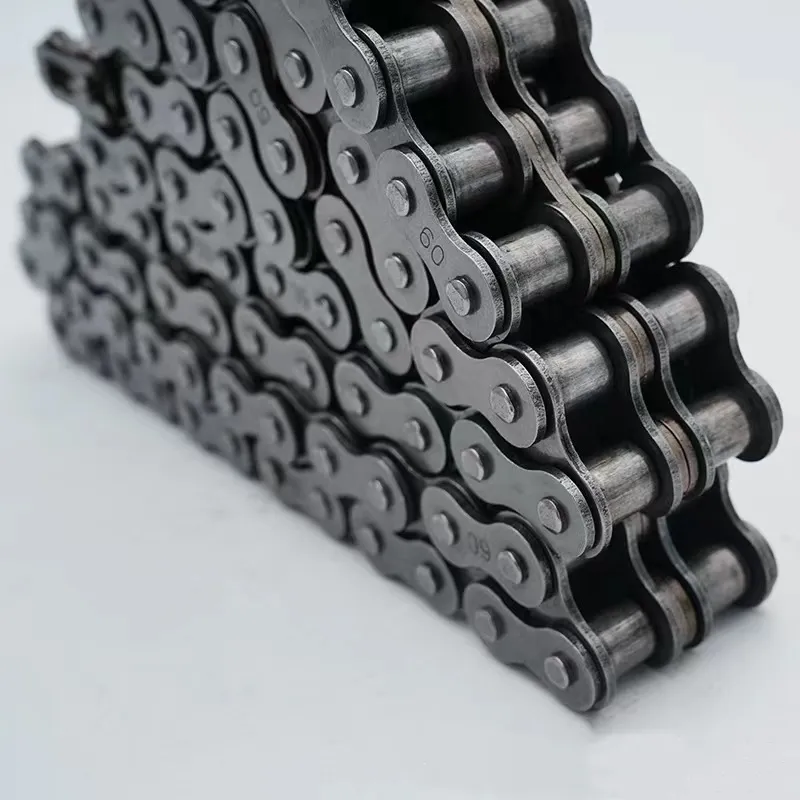
What are the noise and vibration characteristics of roller chains?
Roller chains exhibit specific noise and vibration characteristics during operation. Here’s a detailed answer to the question:
1. Noise Generation: Roller chains can produce noise during operation, especially when operating under certain conditions. The primary sources of noise in roller chains include the interaction between the chain and the sprockets, as well as the impact between the chain pins and the chain guide. The noise level can vary depending on factors such as chain speed, tension, lubrication, alignment, and wear.
2. Vibration: Roller chains can also generate vibrations during operation. These vibrations can be caused by various factors, including the chain’s interaction with the sprockets, chain tension, misalignment, and uneven wear. Excessive vibration can affect the performance and lifespan of the chain and other components in the system. It is important to minimize vibration to ensure smooth and reliable operation.
3. Noise and Vibration Reduction Measures: To mitigate noise and vibration in roller chain systems, several measures can be taken:
- Proper Lubrication: Adequate lubrication reduces friction between the chain and the sprockets, minimizing noise and vibration caused by metal-to-metal contact.
- Alignment and Tension: Ensuring proper alignment and tension of the chain helps to reduce noise and vibration. Misalignment or incorrect tension can lead to increased noise and vibration levels.
- Sprocket Design: The design and condition of the sprockets can affect noise and vibration. Sprockets with worn or damaged teeth can cause increased noise and vibration levels.
- Noise Dampening Elements: Adding noise dampening elements, such as rubber pads or guides, can help reduce the noise generated by the chain’s impact with the chain guides or other components.
- System Design: The overall system design, including the selection of compatible components and proper installation, can contribute to minimizing noise and vibration levels.
It’s important to regularly inspect and maintain the roller chain system to identify and address any sources of noise or excessive vibration. Proper lubrication, alignment, tensioning, and regular replacement of worn components are essential to ensure optimal performance, reduce noise, and minimize vibration in roller chain applications.
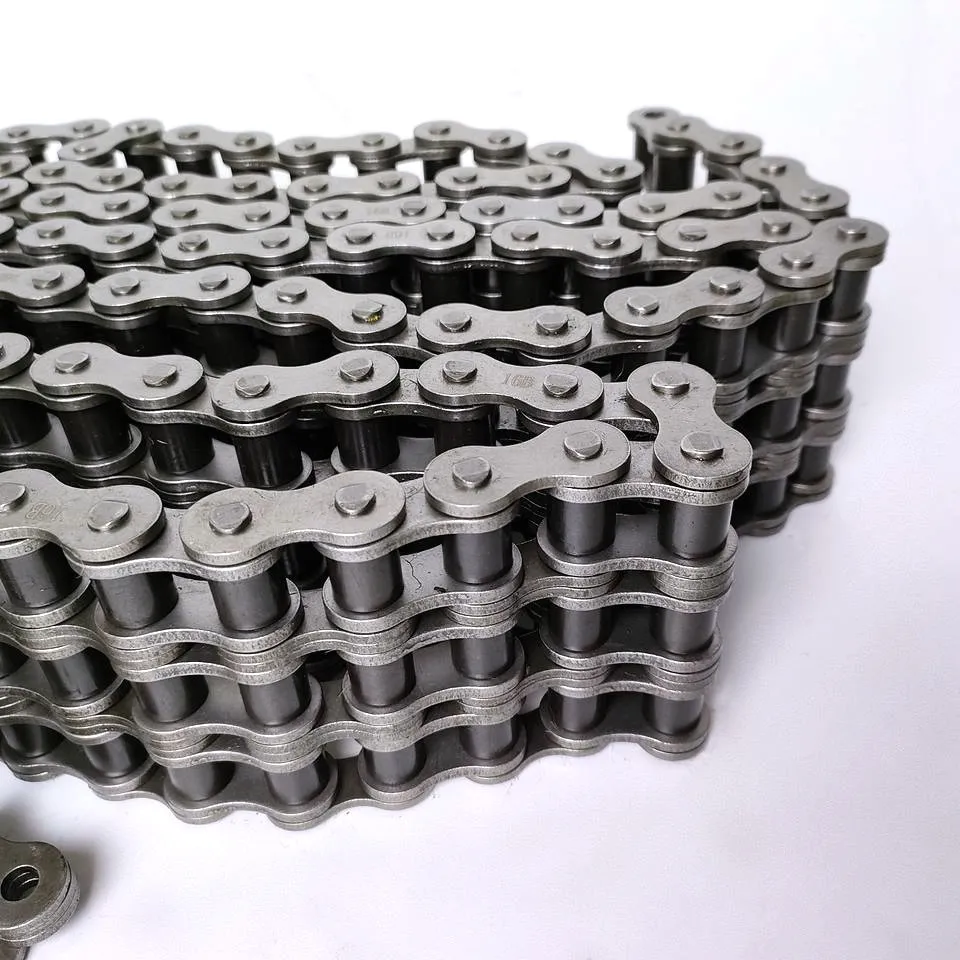
What are the benefits of using a roller chain in printing machinery?
Roller chains offer several advantages when used in printing machinery. Here’s a detailed answer to the question:
1. High Strength and Durability: Roller chains are designed to withstand heavy loads and provide high tensile strength, making them suitable for the demanding requirements of printing machinery. They can efficiently transmit power and handle the stress and torque generated during the printing process.
2. Precise and Reliable Power Transmission: Roller chains provide accurate and reliable power transmission, ensuring consistent and precise movement of the printing components. This is crucial for maintaining print quality, registration, and alignment of the printed material.
3. Wide Range of Speeds: Roller chains can accommodate a wide range of speeds, allowing for flexibility in printing machinery. Whether it’s high-speed printing or slower, more precise operations, roller chains can adapt to different speed requirements.
4. Easy Installation and Maintenance: Roller chains are relatively easy to install and maintain. They can be adjusted, lubricated, and replaced as needed, minimizing downtime and ensuring the continuous operation of printing machinery.
5. Versatility and Adaptability: Roller chains can be customized to meet specific requirements of printing machinery, such as different chain sizes, lengths, and attachments. This versatility allows for easy integration into various types of printing equipment and processes.
6. Cost-Effective Solution: Roller chains offer a cost-effective power transmission solution for printing machinery. They have a long service life, reducing the need for frequent replacements, and their availability in various sizes and configurations allows for efficient use in different printing applications.
In summary, the use of roller chains in printing machinery provides strength, reliability, precision, and versatility. They contribute to the smooth operation of the equipment, ensuring high-quality prints and increased productivity in printing applications.
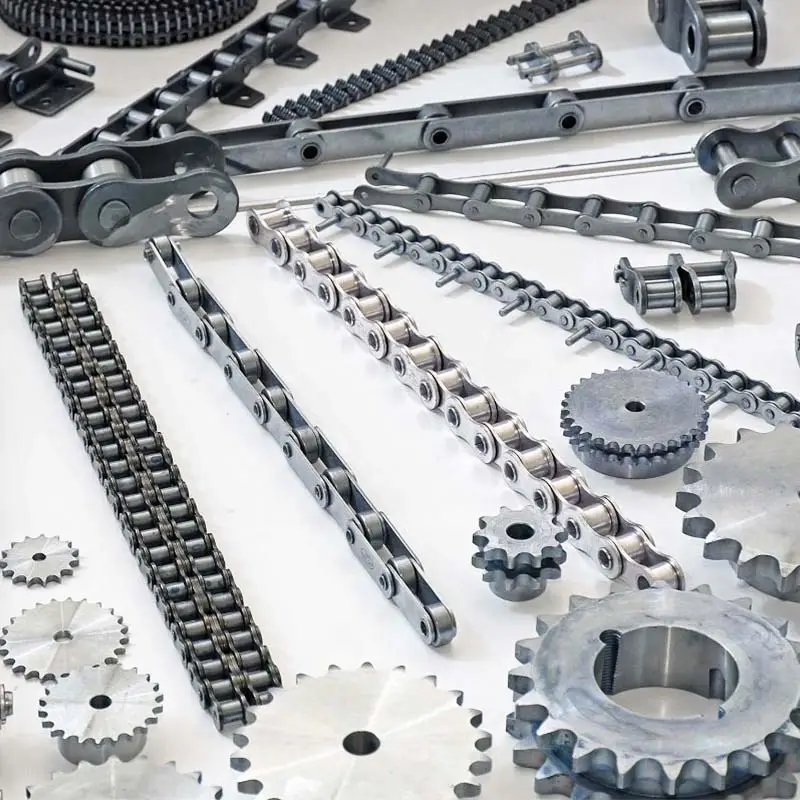
Are there any alternatives to roller chains for power transmission?
Yes, there are several alternatives to roller chains for power transmission, depending on the specific application requirements. Here’s a detailed answer to the question:
1. Belt Drives: Belt drives are a common alternative to roller chains for power transmission. They use a flexible belt made of materials such as rubber, polyurethane, or neoprene. Belt drives offer smooth and quiet operation, high-speed capabilities, and can transmit power over long distances. They are often used in applications where precise synchronization is not required.
2. Gear Drives: Gear drives use meshing gears to transmit power. They offer high torque capabilities, precise motion control, and can handle heavy loads. Gear drives are commonly used in applications that require high efficiency and precise speed control, such as industrial machinery, automotive transmissions, and robotics.
3. Timing Belts: Timing belts, also known as synchronous belts, are toothed belts that provide positive power transmission. They are used in applications that require precise synchronization between two or more shafts. Timing belts offer low noise, high efficiency, and resistance to slippage. They are commonly used in automotive engines, industrial automation, and precision machinery.
4. Chain Drives: Chain drives, similar to roller chains, use interconnected links to transmit power. However, chain drives often have larger pitch sizes and heavier-duty construction compared to roller chains. Chain drives offer high load-carrying capacity, durability, and can operate in demanding conditions. They are commonly used in heavy machinery, agricultural equipment, and motorcycles.
5. Direct Drives: Direct drives eliminate the need for mechanical power transmission components like chains or belts. They directly connect the motor or power source to the driven equipment, providing a more efficient and compact solution. Direct drives are commonly used in applications that require high precision, such as CNC machines, robotics, and linear motion systems.
When considering alternatives to roller chains, factors such as load requirements, speed, precision, environmental conditions, and cost must be taken into account. Each alternative has its own advantages and limitations, and the choice depends on the specific needs of the application.


editor by CX 2023-07-20