
Product Description
ISO Standard Precision Short Pitch Precision Motorcycle Industrial Roller Chain (A series)
Product Description
1. Material: Alloy Steel
2. Surface Treatment: Shot peening
3. Application:
This chain will be widely used in all of the industry machine and equipment.
4. Chain No: 40-1, 50-1, 60-1, 80-1, 100-1, 120-1, etc.
| Product name | High Precision Short Pitch Precision Roller Chain (A series) |
| Materials Available | 1. Stainless Steel: SS304, SS316, etc |
| 2. Alloy Steel: 45Mn, 42CrMo, 20CrMo, etc | |
| 3. OEM according to your request | |
| Surface Treatment | Shot peening, Blackening, Oxygenation, Polishing, Zinc-plated, Nickel-plated, Anodized, etc. |
| Characteristic | Fire Resistant, Oil Resistant, Heat Resistant |
| Design criterion | ISO DIN ANSI & Customer’s Drawing |
| Size | Customer’s Drawing & ISO standard |
| Package | Wooden Case / Container and pallet, or made-to-order |
| Certificate | ISO9001: 2008 |
| Advantage | First quality, Best service, Competitive price, Fast delivery |
| Delivery Time | 20 days for samples. 45 days for official order. |
Detailed Photos
View more products,please click here…
Company Profile
| Standard or Nonstandard: | Standard |
|---|---|
| Application: | Packaging Machinery, Food Machinery, Marine, Mining Equipment, Agricultural Machinery |
| Surface Treatment: | Oil Blooming |
| Structure: | Roller Chain |
| Material: | Alloy |
| Type: | Short Pitch Chain |
| Samples: |
US$ 0/Meter
1 Meter(Min.Order) | |
|---|
| Customization: |
Available
| Customized Request |
|---|
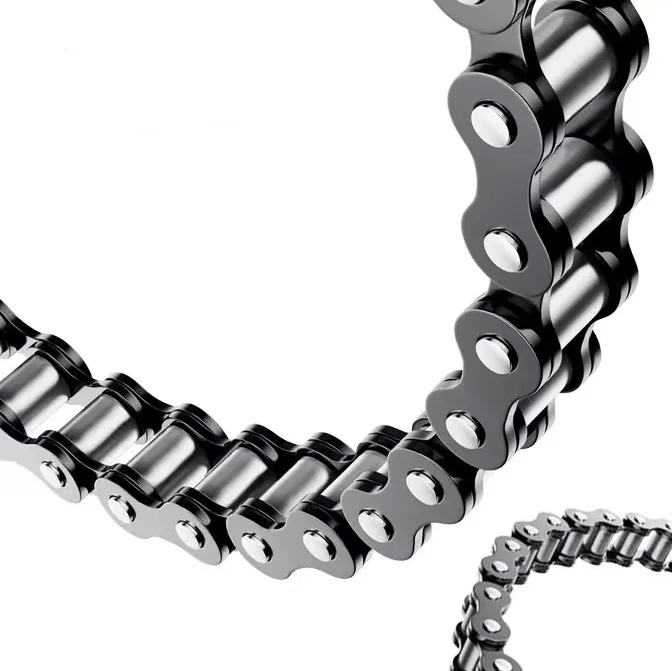
Are roller chains suitable for high-speed applications?
Roller chains are commonly used in a wide range of applications, including high-speed applications. Here’s a detailed answer to the question:
1. Robust Design: Roller chains are designed to withstand high-speed operation. They are constructed using high-quality materials and undergo precision manufacturing processes to ensure strength, durability, and reliability. The design includes features such as hardened pins, solid rollers, and precision bushings, which contribute to their ability to handle high speeds.
2. Efficient Power Transmission: Roller chains provide efficient power transmission at high speeds. The smooth engagement between the chain and the sprockets allows for minimal energy loss, ensuring effective transfer of power from the driving sprocket to the driven sprocket. This is particularly important in high-speed applications where efficiency is crucial.
3. Lubrication and Heat Dissipation: Proper lubrication is essential for the smooth operation of roller chains at high speeds. Lubrication reduces friction and heat generation, which can occur during high-speed operation. The lubricant helps to minimize wear, reduce noise, and dissipate heat, ensuring the chain operates within its optimal temperature range.
4. Dynamic Balance: Roller chains are designed to maintain dynamic balance during high-speed rotation. The symmetrical design and uniform weight distribution of the chain links and rollers help minimize vibration and reduce the risk of chain jump or derailment. This promotes stable and reliable performance, even at high speeds.
It is important to select the appropriate type and size of roller chain for a specific high-speed application, considering factors such as the required load capacity, speed, environmental conditions, and lubrication requirements. Regular maintenance, including proper lubrication, tension adjustment, and inspection of the chain and sprockets, is also crucial to ensure safe and reliable operation at high speeds.
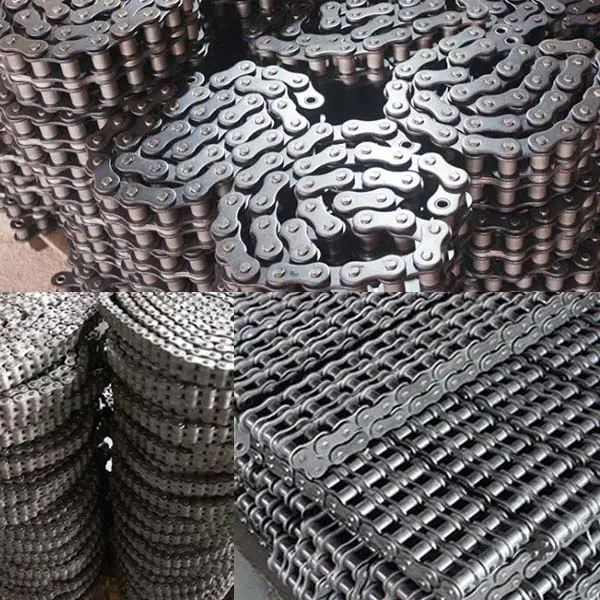
How do roller chains handle reverse motion?
Roller chains are capable of handling reverse motion in applications where the direction of movement needs to be reversed. Here’s a detailed answer to the question:
1. Bi-Directional Operation: Roller chains are designed to operate in both forward and reverse directions. The chain links and rollers are constructed to engage with the sprockets in either direction, allowing the chain to smoothly transfer power and motion.
2. Engagement with Sprockets: When the roller chain is in reverse motion, the rollers on the chain engage with the sprocket teeth in the opposite direction compared to forward motion. The engagement between the chain and the sprockets ensures a secure and reliable power transmission, allowing the chain to efficiently transfer motion in reverse.
3. Lubrication and Maintenance: Proper lubrication is essential for the smooth operation of roller chains, including during reverse motion. Adequate lubrication reduces friction and wear, ensuring the chain’s longevity and performance. Regular maintenance, including lubrication and inspection, helps identify any issues that may affect the chain’s ability to handle reverse motion and allows for timely corrective actions.
4. Proper Tensioning: Maintaining proper tension in the roller chain is crucial for its performance in both forward and reverse motion. Adequate tension ensures the chain remains engaged with the sprockets and prevents slippage or disengagement during reverse operation. Proper tensioning can be achieved through tensioning devices or adjustable mounting arrangements.
5. Load Capacity: Roller chains are designed to handle various loads, including reverse motion. However, it’s important to consider the specific application requirements and select a roller chain with the appropriate load capacity and strength to withstand the forces experienced during reverse operation.
6. Alignment and Installation: Proper alignment of the roller chain and the sprockets is essential for reliable performance in both forward and reverse motion. Ensuring correct installation, including proper alignment and tensioning, helps maintain the chain’s engagement with the sprockets and ensures smooth operation in reverse.
It’s worth noting that the specific application requirements, such as speed, load, environmental conditions, and the type of roller chain, should be considered when determining the suitability of roller chains for reverse motion. Consulting the manufacturer’s guidelines and recommendations is important to ensure proper selection, installation, and maintenance of roller chains in applications involving reverse operation.
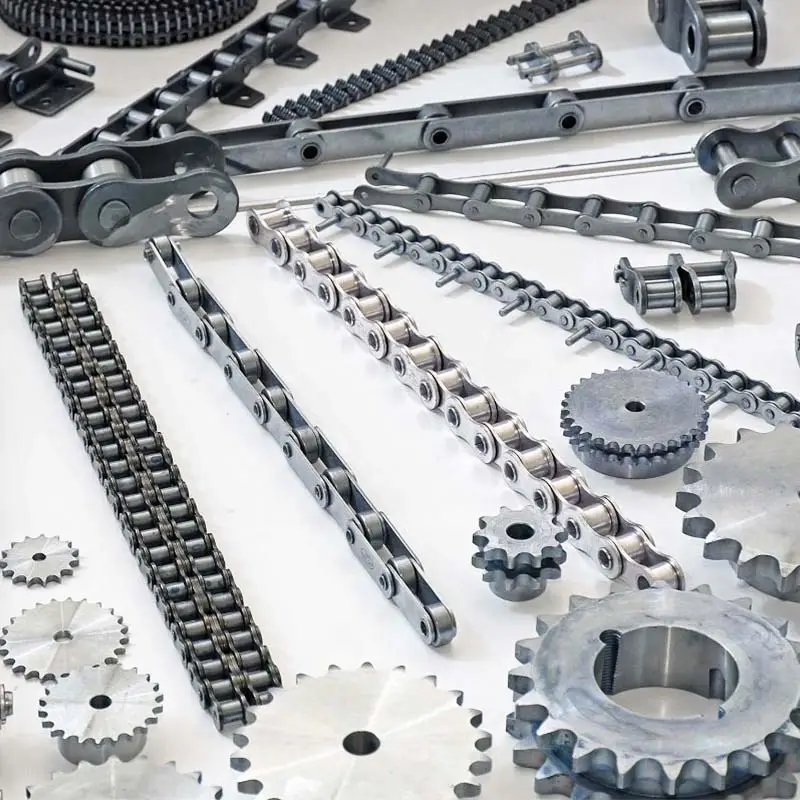
Are there any alternatives to roller chains for power transmission?
Yes, there are several alternatives to roller chains for power transmission, depending on the specific application requirements. Here’s a detailed answer to the question:
1. Belt Drives: Belt drives are a common alternative to roller chains for power transmission. They use a flexible belt made of materials such as rubber, polyurethane, or neoprene. Belt drives offer smooth and quiet operation, high-speed capabilities, and can transmit power over long distances. They are often used in applications where precise synchronization is not required.
2. Gear Drives: Gear drives use meshing gears to transmit power. They offer high torque capabilities, precise motion control, and can handle heavy loads. Gear drives are commonly used in applications that require high efficiency and precise speed control, such as industrial machinery, automotive transmissions, and robotics.
3. Timing Belts: Timing belts, also known as synchronous belts, are toothed belts that provide positive power transmission. They are used in applications that require precise synchronization between two or more shafts. Timing belts offer low noise, high efficiency, and resistance to slippage. They are commonly used in automotive engines, industrial automation, and precision machinery.
4. Chain Drives: Chain drives, similar to roller chains, use interconnected links to transmit power. However, chain drives often have larger pitch sizes and heavier-duty construction compared to roller chains. Chain drives offer high load-carrying capacity, durability, and can operate in demanding conditions. They are commonly used in heavy machinery, agricultural equipment, and motorcycles.
5. Direct Drives: Direct drives eliminate the need for mechanical power transmission components like chains or belts. They directly connect the motor or power source to the driven equipment, providing a more efficient and compact solution. Direct drives are commonly used in applications that require high precision, such as CNC machines, robotics, and linear motion systems.
When considering alternatives to roller chains, factors such as load requirements, speed, precision, environmental conditions, and cost must be taken into account. Each alternative has its own advantages and limitations, and the choice depends on the specific needs of the application.


editor by CX 2023-10-21