
Product Description
|
Product |
Standard Double Pitch Roller chain |
||
|
Material |
40Mn steel,304 stainless steel, 316 stainless steel and 201 stainless steel. |
||
|
Types |
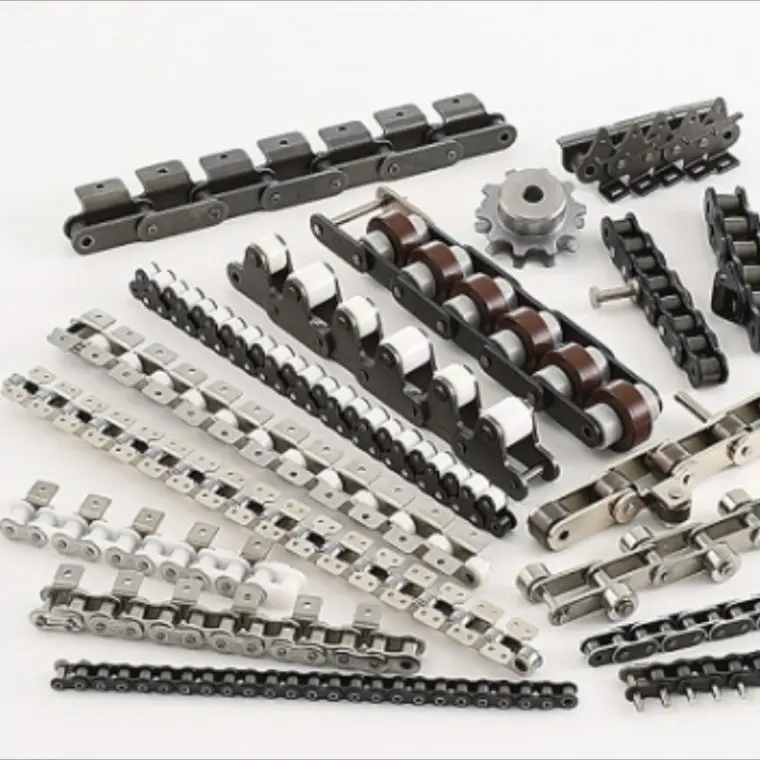
Standard chains and special chains, such as A or B series chains, roller chains, driving chains, conveyor chains, hoisting chains, agricultural chains, sprockets, gears, wheels and so on. |
||
|
Series |
A series(12.7-50.8mm pitches),B series (9.525-50.8mm pitches)and the heavy series. |
||
|
Short pitch precision roller chain |
Simplex Roller Chains&Bushing Chains: 04C-1,06C-1,085-1,08A-1,10A-1,12A-1,16A-1,20A-1,24A-1,28A-1,32A-1,36A-1,40A-1,48A-1 04C-2,06C-2,085-2,08A-2,10A-2,12A-2,16A-2,20A-2,24A-2,28A-2,32A-2,36A-2,40A-2,48A-2 04C-3,06C-2,085-3,08A-3,10A-3,12A-3,16A-3,20A-3,24A-3,28A-3,32A-3,36A-3,40A-3,48A-3 |
||
|
Chain link type |
Standard links (without attachment) and non-standard links (with attachment).
A1: One-side,one hole cranked attachments. |
||
|
Our Products Advantage |
1. Every step from production order to the packing process has a strict quality inspection. |
||
1.Fast delivery: Standard products can be delivered in as fast as 20 days
2.Good service: timely reply, prompt quotation, responsible for the product
3.High cost performance: can maintain price stability for a certain period of time, bringing greater profits to customers
4.Good quality: production and testing have corresponding supervision to ensure product quality and get high praise from customers
5.OEM service: products can be customized according to drawings and requirements
We are responsible for the ordered products. We are very confident in the products we produce. Of course, if you have any problems after receiving the goods, you can contact us directly. We will confirm and negotiate in time to solve your difficulties.
| Standard or Nonstandard: | Standard |
|---|---|
| Application: | Textile Machinery, Garment Machinery, Conveyer Equipment, Packaging Machinery, Food Machinery, Mining Equipment, Agricultural Machinery |
| Surface Treatment: | Oil Blooming |
| Structure: | Roller Chain |
| Material: | Alloy |
| Type: | Double Pitch Chain |
| Samples: |
US$ 35/kg
1 kg(Min.Order) | |
|---|
| Customization: |
Available
| Customized Request |
|---|
What are the factors to consider when selecting a roller chain for an application?
Choosing the right roller chain for an application involves considering several important factors. Here’s a detailed answer to the question:
1. Load Capacity: The load capacity of the roller chain should match or exceed the maximum anticipated load in the application. Consider the weight and type of the load, as well as any shock loads or dynamic forces that may be present.
2. Speed and RPM: Determine the required speed and RPM (revolutions per minute) of the roller chain. High-speed applications may require special high-speed chains with improved heat dissipation and reduced centrifugal forces.
3. Environment: Assess the operating environment of the application. Consider factors such as temperature, humidity, dust, dirt, chemicals, and exposure to corrosive substances. Choose a roller chain with appropriate corrosion resistance, sealing, lubrication, or protective coatings based on the specific environmental conditions.
4. Length and Pitch: Determine the required length and pitch of the roller chain based on the distance between the sprockets and the desired positioning of the driven and driving components.
5. Maintenance Requirements: Consider the desired maintenance level for the application. Some roller chains may require regular lubrication, while others offer maintenance-free or self-lubricating options. Assess the availability of maintenance resources and the impact of downtime on the overall operation.
6. Compatibility: Ensure compatibility between the roller chain and the sprockets used in the application. The roller chain and sprockets should have matching pitch, tooth profile, and number of teeth to ensure proper engagement and smooth operation.
7. Certification and Standards: In certain industries, compliance with specific certifications or standards may be required. Consider whether the roller chain meets industry-specific requirements such as ISO, ANSI, or industry-specific regulations.
8. Cost and Availability: Evaluate the cost and availability of the roller chain, including factors such as initial purchase price, long-term maintenance costs, and the availability of spare parts or replacement chains.
By carefully considering these factors and consulting with experts or manufacturers, you can select the most suitable roller chain for your specific application, ensuring reliable and efficient power transmission.
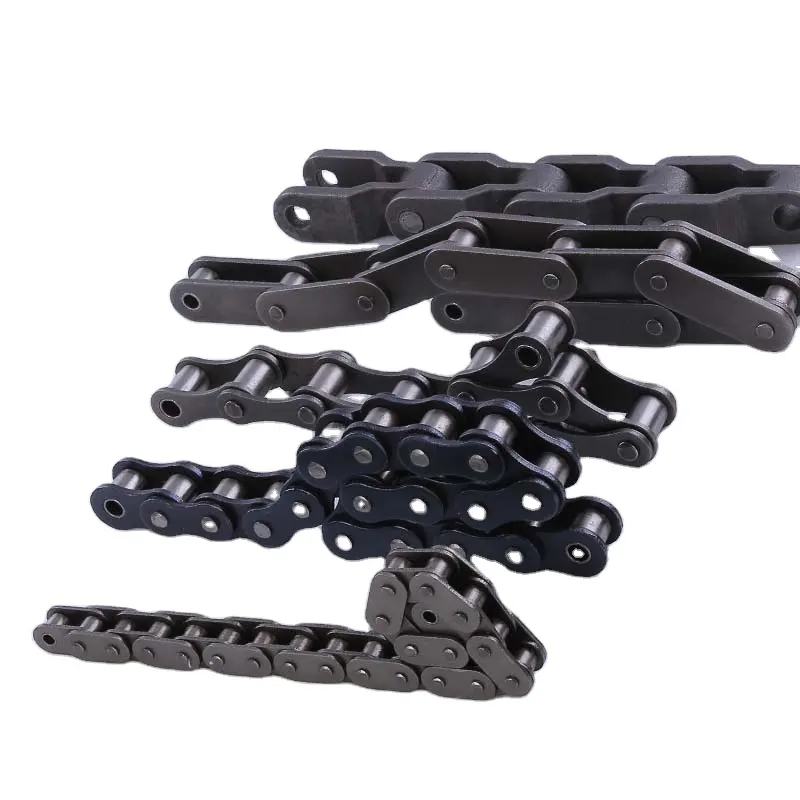
What are the differences between standard and specialty roller chains?
Standard roller chains refer to chains that are commonly used in a wide range of applications and are readily available from chain manufacturers. These chains typically have standard dimensions, including pitch, roller diameter, and pin diameter, and are made from materials such as carbon steel, stainless steel, or nickel-plated steel. Standard roller chains are suitable for most general-purpose applications that require moderate strength and durability.
Specialty roller chains, on the other hand, are designed for specific applications that require unique features or properties. These chains may have non-standard dimensions or be made from specialized materials such as high-strength alloys or plastic. Specialty roller chains can be used in a variety of industries, including food processing, automotive, and aerospace. Examples of specialty roller chains include corrosion-resistant chains, high-temperature chains, and chains with special attachments for conveying specific products or materials.
Overall, the main differences between standard and specialty roller chains are their intended applications and the unique features that they offer. Standard roller chains are suitable for most general-purpose applications, while specialty roller chains are tailored to specific applications that require special properties or features.
Can roller chains be used in high-temperature environments?
Yes, roller chains can be used in high-temperature environments, but it depends on the specific type of roller chain and the temperature range involved. Here is a detailed answer to the question:
1. Heat-resistant materials: Roller chains intended for high-temperature applications are typically made from heat-resistant materials such as stainless steel or alloy steels that can withstand elevated temperatures without significant deformation or loss of strength.
2. Lubrication: Proper lubrication is crucial for the operation of roller chains in high-temperature environments. Special high-temperature lubricants are available that can withstand the elevated temperatures without breaking down or evaporating, ensuring effective lubrication and reducing wear.
3. Heat treatment: Some roller chains undergo specific heat treatment processes to enhance their resistance to high temperatures. Heat treatment can improve the chain’s strength, hardness, and resistance to thermal expansion, enabling it to perform reliably in hot conditions.
4. Design considerations: Roller chain manufacturers take into account the effects of high temperatures on the chain’s performance and design features that mitigate these effects. This may include factors such as increased clearances, heat dissipation mechanisms, and special coatings or finishes to protect against corrosion or oxidation.
5. Temperature limitations: While roller chains can handle elevated temperatures, there are limits to their temperature resistance. The maximum temperature at which a roller chain can operate depends on factors such as the material, lubrication, load, and speed. It is crucial to consult the manufacturer’s specifications and guidelines to ensure the chain is suitable for the intended temperature range.
It is important to note that using roller chains in high-temperature environments may require additional precautions, such as proper ventilation, heat shielding, or periodic inspections to monitor chain performance and ensure safety and reliability. Consulting with experts or chain manufacturers is recommended to determine the most suitable roller chain for specific high-temperature applications.


editor by CX 2023-07-21